

Want to hire this expert for a project? Request a quote for free.
Profile Details
Create Project
USD 95 /hr
Hire Sobhan M.
Germany
USD 95 /hr
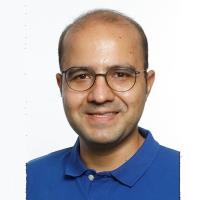
PhD | Senior Data Scientist | Science Manager and PhD Coach | Turning Multimodal Clinical Data into Actionable Insight
Profile Summary
Subject Matter Expertise
Services
Writing
Copywriting,
Creative Writing,
General Proofreading & Editing
Work Experience
Senior Postdoc Researcher
Helmholtz Centre for Infection Research
June 2025 - Present 
Senior Postdoctoral Researcher
Fraunhofer SCAI
October 2023 - May 2025
Postdoctoral Research Associate
Digital Health Lab Düsseldorf
February 2022 - September 2023
Education
PhD in Computer Science
Univerity of Bonn
April 2018 - March 2022
MSc in Media Informatics
RWTH Aachen
October 2011 - March 2015
Certifications
- Certification details not provided.
Publications
JOURNAL ARTICLE
Holger Fröhlich, Anne Funck Hansen, Mika Hilvo, Gunther Jansen, Sumit Madan, Sobhan Moazemi, Sanziana Negreanu, Venkata Satagopam, Phil Gribbon, Christian Muehlendyck (2025). Reality Check: The Aspirations of the European Health Data Space Amidst Challenges in Decentralized Data Analysis . Journal of Medical Internet Research.
Lisa Kühnel, Julian Schneider, Ines Perrar, Tim Adams, Sobhan Moazemi, Fabian Prasser, Ute Nöthlings, Holger Fröhlich, Juliane Fluck (2024). Synthetic data generation for a longitudinal cohort study – evaluation, method extension and reproduction of published data analysis results . Scientific Reports.
Steven Kessler, Dennis Schroeder, Sergej Korlakov, Vincent Hettlich, Sebastian Kalkhoff, Sobhan Moazemi, Artur Lichtenberg, Falko Schmid, Hug Aubin(2023). Predicting readmission to the cardiovascular intensive care unit using recurrent neural networks . DIGITAL HEALTH. 9. Microsoft.AspNetCore.Mvc.Localization.LocalizedHtmlString 205520762211495. {SAGE} Publications
Kessler, Steven, Schroeder, Dennis, Korlakov, Sergej, Hettlich, Vincent, Kalkhoff, Sebastian, Moazemi, Sobhan, Lichtenberg, Artur, Schmid, Falko, Aubin, Hug (2023). Predicting readmission to the cardiovascular intensive care unit using recurrent neural networks . Digital Health.
Moazemi, Sobhan, Vahdati, Sahar, Li, Jason, Kalkhoff, Sebastian, Castano, Luis J. V., Dewitz, Bastian, Bibo, Roman, Sabouniaghdam, Parisa, Tootooni, Mohammad S., Bundschuh, Ralph A., et al. (2023). Artificial intelligence for clinical decision support for monitoring patients in cardiovascular ICUs: A systematic review . Frontiers in Medicine.
Sobhan Moazemi(2022). Real-time 3D scans of cardiac surgery using a single optical-see-through head-mounted display in a mobile setup . Frontiers in Virtual Reality. 3. Frontiers Media {SA}
Sobhan Moazemi, Sebastian Kalkhoff, Steven Kessler, Zeynep Boztoprak, Vincent Hettlich, Artur Liebrecht, Roman Bibo, Bastian Dewitz, Artur Lichtenberg, Hug Aubin, et al. (2022). Evaluating a Recurrent Neural Network Model for Predicting Readmission to Cardiovascular ICUs Based on Clinical Time Series Data . Engineering Proceedings.
Dewitz, Bastian, Bibo, Roman, Moazemi, Sobhan, Kalkhoff, Sebastian, Recker, Stephan, Liebrecht, Artur, Lichtenberg, Artur, Geiger, Christian, Steinicke, Frank, Aubin, Hug, et al. (2022). Real-time 3D scans of cardiac surgery using a single optical-see-through head-mounted display in a mobile setup . Frontiers in Virtual Reality.
Annette Erle, Sobhan Moazemi, Susanne Lütje, Markus Essler, Thomas Schultz, Ralph A. Bundschuh (2021). Evaluating a Machine Learning Tool for the Classification of Pathological Uptake in Whole-Body PSMA-PET-CT Scans . Tomography.
Annette Erle, Sobhan Moazemi, Susanne Lütje, Markus Essler, Thomas Schultz, Ralph A. Bundschuh (2021). Evaluating a Machine Learning Tool for the Classification of Pathological Uptake in Whole-Body PSMA-PET-CT Scans . Tomography.
Sobhan Moazemi and Annette Erle and Zain Khurshid and Susanne Lütje and Michael Muders and Markus Essler and Thomas Schultz and Ralph A. Bundschuh(2021). Decision-support for treatment with 177Lu-PSMA: machine learning predicts response with high accuracy based on PSMA-PET/CT and clinical parameters . Annals of Translational Medicine. 9. (9). Microsoft.AspNetCore.Mvc.Localization.LocalizedHtmlString 818--818. {AME} Publishing Company
Sobhan Moazemi, Annette Erle, Susanne Lütje, Florian C. Gaertner, Markus Essler, Ralph A. Bundschuh(2021). Estimating the Potential of Radiomics Features and Radiomics Signature from Pretherapeutic PSMA-PET-CT Scans and Clinical Data for Prediction of Overall Survival When Treated with 177Lu-PSMA . Diagnostics. 11. (2). Microsoft.AspNetCore.Mvc.Localization.LocalizedHtmlString 186. {MDPI} {AG}
Sobhan Moazemi, Annette Erle, Susanne Lütje, Florian C. Gaertner, Markus Essler, Ralph A. Bundschuh (2021). Estimating the Potential of Radiomics Features and Radiomics Signature from Pretherapeutic PSMA-PET-CT Scans and Clinical Data for Prediction of Overall Survival When Treated with <sup>177</sup>Lu-PSMA . Diagnostics.
Moazemi, Sobhan, Erle, Annette, Luetje, Susanne, Gaertner, Florian C., Essler, Markus, Bundschuh, Ralph A. (2021). Estimating the Potential of Radiomics Features and Radiomics Signature from Pretherapeutic PSMA-PET-CT Scans and Clinical Data for Prediction of Overall Survival When Treated with Lu-177-PSMA . Diagnostics.
Moazemi, Sobhan, Essler, Markus, Schultz, Thomas, Bundschuh, Ralph A. (2021). Predicting Treatment Response in Prostate Cancer Patients Based on Multimodal PET/CT for Clinical Decision Support . Lecture Notes in Computer Science.
Sobhan Moazemi, Zain Khurshid, Annette Erle, Susanne Lütje, Markus Essler, Thomas Schultz, Ralph A. Bundschuh(2020). Machine Learning Facilitates Hotspot Classification in PSMA-PET/CT with Nuclear Medicine Specialist Accuracy . Diagnostics. 10. (9). Microsoft.AspNetCore.Mvc.Localization.LocalizedHtmlString 622. {MDPI} {AG}
Sobhan Moazemi, Zain Khurshid, Annette Erle, Susanne Lütje, Markus Essler, Thomas Schultz, Ralph A. Bundschuh (2020). Machine Learning Facilitates Hotspot Classification in PSMA-PET/CT with Nuclear Medicine Specialist Accuracy . Diagnostics.
Moazemi, Sobhan, Khurshid, Zain, Erle, Annette, Luetje, Susanne, Essler, Markus, Schultz, Thomas, Bundschuh, Ralph A. (2020). Machine Learning Facilitates Hotspot Classification in PSMA-PET/CT with Nuclear Medicine Specialist Accuracy . Diagnostics.
BOOK CHAPTER
Sobhan Moazemi, Tim Adams, Hwei Geok Ng, Lisa Kühnel, Julian Schneider, Anatol-Fiete Näher, Juliane Fluck, Holger Fröhlich (2024). NFDI4Health Workflow and Service for Synthetic Data Generation, Assessment and Risk Management . Studies in Health Technology and Informatics.
Sahar Vahdati, Deepankan Bharathi Nagaraj, Maximilian Bryan, Sobhan Moazemi, Sabine Gründer-Fahrer, Michael Martin (2023). Utilizing Transformers on OCT Imagery and Metadata for Treatment Response Prediction in Macular Edema Patients .
Sobhan Moazemi, Markus Essler, Thomas Schultz, Ralph A. Bundschuh(2021). Predicting Treatment Response in Prostate Cancer Patients Based on Multimodal PET/CT for Clinical Decision Support . 22--35Springer International Publishing
CONFERENCE PAPER
Bastian Dewitz, Sobhan Moazemi, Sebastian Kalkhoff, Steven Kessler, Christian Geiger, Frank Steinicke, Hug Aubin, Falko Schmid (2023). Enacted Selves in Technological Activities – Framework and Case Study in Immersive Telementoring .
Sobhan Moazemi(2022). ARMAGNI: Augmented Reality Enhanced Surgical Magnifying Glasses . Linköping Electronic Conference Proceedings. Linköping University Electronic Press
Sobhan Moazemi, Sebastian Kalkhoff, Steven Kessler, Zeynep Boztoprak, Vincent Hettlich, Artur Liebrecht, Roman Bibo, Bastian Dewitz, Artur Lichtenberg, Hug Aubin, et al.(2022). Evaluating a Recurrent Neural Network Model for Predicting Readmission to Cardiovascular ICUs Based on Clinical Time Series Data . {MDPI}
Ratings and Comments
Total Projects Awarded:
Comments: