level-one heading

Why Kolabtree
Getting started is quick and easy. No upfront fees
It’s free to request a service and invite bids from experts
Discuss requirements with the expert in detail before accepting statement of work from Kolabtree
Collaborate with the expert directly to get your work done the right way
Fund project when you hire the expert, but approve the deliverables only once work is done
Want to hire this expert for a project? Request a quote for free.
Profile Details
Create Project
★★★★★
☆☆☆☆☆
USD 100 /hr
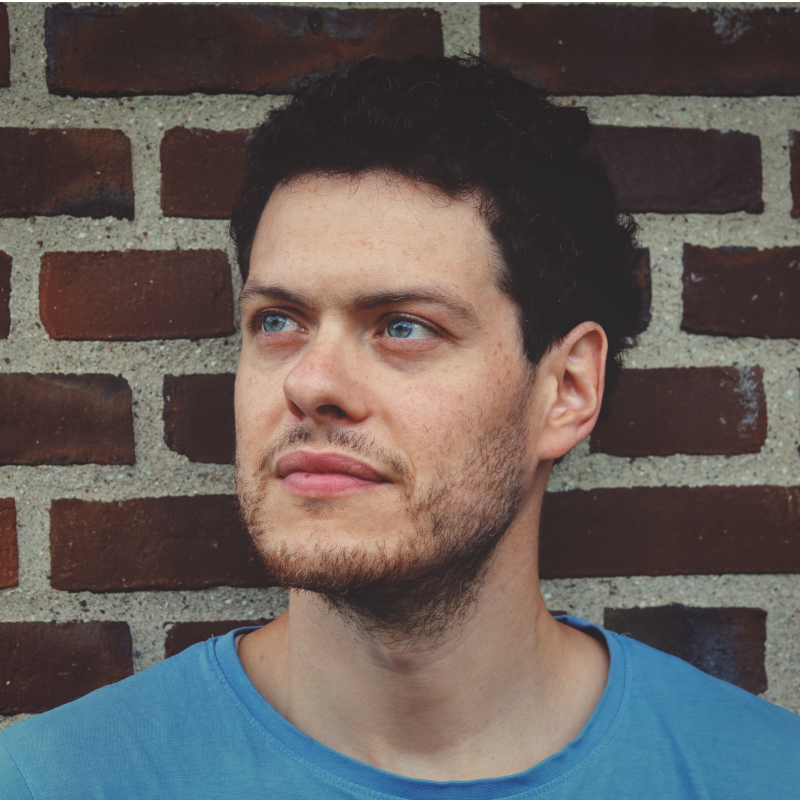
Hire Dr. Samuele S.
Denmark
USD 100 /hr

OMICS Bioinformatician & Data scientist | single cell omics, bioinformatics analysis, statistical modelling, course org

Profile Summary
Subject Matter Expertise
Services
Writing Technical Writing, General Proofreading & Editing
Research Systematic Literature Review, Secondary Data Collection
Consulting Scientific and Technical Consulting
Data & AI Predictive Modeling, Statistical Analysis, Algorithm Design-ML, Data Visualization, Data Mining, Data Cleaning, Data Processing, Data Insights
Work Experience

TAP, Special Consultant

Aarhus University

September 2024 - Present

Consultant

Aarhus Universitet

January 2020 - Present

Postdoctorate

Aarhus University

January 2018 - January 2020

Education

PhD statistics

Copenhagen University

January 2015 - January 2018

Certifications
  • PhD

    Aarhus University

    January 2018 - Present

Publications
JOURNAL ARTICLE
Defining the vascular niche of human adipose tissue across metabolic states @misc{048883f787f24bd1835cefb2c84fbfb4, title = "Defining the vascular niche of human adipose tissue across metabolic states", abstract = "Adipose tissue homeostasis depends on a healthy vascular network. Vascular malfunction is a hallmark of obesity 1 , and vascular endothelial dysfunction, in particular, accelerates metabolic diseases, including obesity and diabetes. Single-cell transcriptomics studies have mapped the cellular landscape of human white adipose tissue (WAT) 2-8 . However, the vascular niche remains relatively undefined 9 , especially regarding its heterogeneity, function, and role in metabolic disease. To address this gap, we created a single-cell transcriptome atlas of human subcutaneous adipose tissue (SAT), comprising nearly 70,000 vascular cells from 65 individuals. We characterized seven canonical adipose tissue endothelial cell (AdEC) subtypes and identified a distinct heterogenous population, here referred to as sub-AdECs. Sub-AdECs exhibit gene signatures characteristic of multiple cell types, including mesenchymal, adipocytic, and immune, suggesting they possess diverse properties and identities. Through computational analyses and whole-mount imaging, we validated the occurrence of sub-AdECs and show that these cells likely arise through endothelial-mesenchymal transition (EndMT), the modulation of which limits obesity-associated adipose tissue inflammation and fibrosis. Furthermore, we compared the transcriptomes of vascular cells from individuals living with or without obesity and type 2 diabetes and find metabolic disease-associated inflammatory and fibrotic transcriptomic patterns. The atlas and accompanying analyses establish a solid foundation for investigations into the biology of the adipose tissue vascular niche and its contribution to the pathogenesis of metabolic disease. ", author = "Ibrahim AlZaim and Hassan, \{Mohamed N\} and Maja Schr{\"o}ter and Luca Mannino and Katarina Dragicevic and Sjogaard, \{Marie Balle\} and Joseph Festa and Lolita Dokshokova and Sophie Weinbrenner and \{Tardajos Ayllon\}, Blanca and Bettina Hansen and Rasmussen, \{Rikke Kongsgaard\} and Christensen, \{Julie N\} and Olivia Wagman and Ruby Schipper and Min Cai and Wouter Dheedene and Bohn, \{Anja Bille\} and Jean Farup and Lin Lin and Samuele Soraggi and Thorsen, \{Anna Dalsgaard\} and Amanda B{\ae}k and Thomsen, \{Henrik Holm\} and \{von Heesen\}, Maximilian and Lena-Christin Conradi and Paul Evans and Hagberg, \{Carolina E\} and Joerg Heeren and Margo Emont and Rosen, \{Evan D\} and Aernout Luttun and Anders Etzerodt and Lucas Massier and Mikael Ryd{\'e}n and Niklas Mejhert and Matthias Bl{\"u}her and Konstantin Khodosevich and Fenton, \{Robert A\} and Sheikh, \{Bilal N\} and Niels Jessen and \{de Rooij\}, \{Laura P M H\} and Joanna Kalucka", year = "2025", month = sep, day = "22", doi = "10.1101/2024.09.22.610444", language = "English", publisher = "bioRxiv", type = "WorkingPaper", institution = "bioRxiv", } .
Samuele Soraggi, Johanna Rhodes, Isin Altinkaya, Oliver Tarrant, Francois Balloux, Matthew C Fisher, Matteo Fumagalli (2022). HMMploidy: inference of ploidy levels from short-read sequencing data . Peer Community Journal.
HMMploidy @article{351cd7a181ef42988f782a5c53d05ebd, title = "HMMploidy: inference of ploidy levels from short-read sequencing data ", abstract = "The inference of ploidy levels from genomic data is important to understand molecular mechanisms underpinning genome evolution. However, current methods based on allele frequency and sequencing depth variation do not have power to infer ploidy levels at low-and mid-depth sequencing data, as they do not account for data uncertainty. Here we introduce HMMploidy, a novel tool that leverages the information from multiple samples and combines the information from sequencing depth and genotype likelihoods. We demonstrate that HMMploidy outperforms existing methods in most tested scenarios, especially at low-depth with large sample size. We apply HMMploidy to sequencing data from the pathogenic fungus Cryptococcus neoformans and retrieve pervasive patterns of aneuploidy, even when artificially downsampling the sequencing data. We envisage that HMMploidy will have wide applicability to low-depth sequencing data from polyploid and aneuploid species.", keywords = "NGS sequencing, ploidy, Genotype likelihoods", author = "Samuele Soraggi and Johanna Rhodes and Isin Altinkaya and Oliver Tarrant and Francois Balloux and Fisher, \{Matthew C\} and Matteo Fumagalli", year = "2022", month = oct, doi = "10.24072/pcjournal.178", language = "English", volume = "2", journal = "Peer Community Journal", issn = "2804-3871", publisher = "Peer Community In", } . Peer Community Journal.
Rapid Identification of the Tumor-Specific Reactive TIL Repertoire via Combined Detection of CD137, TNF, and IFNγ, Following Recognition of Autologous Tumor-Antigens @article{ee370fc12dd7483a8142625cbf596bd2, title = "Rapid Identification of the Tumor-Specific Reactive TIL Repertoire via Combined Detection of CD137, TNF, and IFNγ, Following Recognition of Autologous Tumor-Antigens", abstract = "Detecting the entire repertoire of tumor-specific reactive tumor-infiltrating lymphocytes (TILs) is essential for investigating their immunological functions in the tumor microenvironment. Current in vitro assays identifying tumor-specific functional activation measure the upregulation of surface molecules, de novo production of antitumor cytokines, or mobilization of cytotoxic granules following recognition of tumor-antigens, yet there is no widely adopted standard method. Here we established an enhanced, yet simple, method for identifying simultaneously CD8+ and CD4+ tumor-specific reactive TILs in vitro, using a combination of widely known and available flow cytometry assays. By combining the detection of intracellular CD137 and de novo production of TNF and IFNγ after recognition of naturally-presented tumor antigens, we demonstrate that a larger fraction of tumor-specific and reactive CD8+ TILs can be detected in vitro compared to commonly used assays. This assay revealed multiple polyfunctionality-based clusters of both CD4+ and CD8+ tumor-specific reactive TILs. In situ, the combined detection of TNFRSF9, TNF, and IFNG identified most of the tumor-specific reactive TIL repertoire. In conclusion, we describe a straightforward method for efficient identification of the tumor-specific reactive TIL repertoire in vitro, which can be rapidly adopted in most cancer immunology laboratories.", keywords = "CD137 (4-1BB), immune-monitoring, immune-responses to cancer, single-cell technologies, tumor-infiltrating lymphocytes (TILs), tumor-specific activation, tumor-specific reactivity", author = "Arianna Draghi and Chamberlain, \{Christopher Aled\} and Shawez Khan and Krisztian Papp and Martin Lauss and Samuele Soraggi and Radic, \{Haja Dominike\} and Mario Presti and Katja Harbst and Aishwarya Gokuldass and Anders Kverneland and Morten Nielsen and Westergaard, \{Marie Christine Wulff\} and Andersen, \{Mads Hald\} and Istvan Csabai and G{\"o}ran J{\"o}nsson and Zoltan Szallasi and Svane, \{Inge Marie\} and Marco Donia", note = "Publisher Copyright: {\textcopyright} Copyright {\textcopyright} 2021 Draghi, Chamberlain, Khan, Papp, Lauss, Soraggi, Radic, Presti, Harbst, Gokuldass, Kverneland, Nielsen, Westergaard, Andersen, Csabai, J{\"o}nsson, Szallasi, Svane and Donia.", year = "2021", month = oct, doi = "10.3389/fimmu.2021.705422", language = "English", volume = "12", journal = "Frontiers in Immunology", issn = "1664-3224", publisher = "Frontiers Media SA", } . Frontiers in Immunology.
Samuele Soraggi, Meritxell Riera, Ewa Rajpert-De Meyts, Mikkel H. Schierup, Kristian Almstrup(2021). Evaluating genetic causes of azoospermia: What can we learn from a complex cellular structure and single-cell transcriptomics of the human testis? . Human Genetics. Springer Science and Business Media {LLC}
Evaluating genetic causes of azoospermia @article{8e54c321f7a14536a1344d2b75eafd63, title = "Evaluating genetic causes of azoospermia: What can we learn from a complex cellular structure and single-cell transcriptomics of the human testis?", abstract = "Azoospermia is a condition defined as the absence of spermatozoa in the ejaculate, but the testicular phenotype of men with azoospermia may be very variable, ranging from full spermatogenesis, through arrested maturation of germ cells at different stages, to completely degenerated tissue with ghost tubules. Hence, information regarding the cell-type-specific expression patterns is needed to prioritise potential pathogenic variants that contribute to the pathogenesis of azoospermia. Thanks to technological advances within next-generation sequencing, it is now possible to obtain detailed cell-type-specific expression patterns in the testis by single-cell RNA sequencing. However, to interpret single-cell RNA sequencing data properly, substantial knowledge of the highly sophisticated data processing and visualisation methods is needed. Here we review the complex cellular structure of the human testis in different types of azoospermia and outline how known genetic alterations affect the pathology of the testis. We combined the currently available single-cell RNA sequencing datasets originating from the human testis into one dataset covering 62,751 testicular cells, each with a median of 2637 transcripts quantified. We show what effects the most common data-processing steps have, and how different visualisation methods can be used. Furthermore, we calculated expression patterns in pseudotime, and show how splicing rates can be used to determine the velocity of differentiation during spermatogenesis. With the combined dataset we show expression patterns and network analysis of genes known to be involved in the pathogenesis of azoospermia. Finally, we provide the combined dataset as an interactive online resource where expression of genes and different visualisation methods can be explored (https://testis.cells.ucsc.edu/).", keywords = "EXPRESSION, INTERCELLULAR BRIDGES, MALE-INFERTILITY, MEN, MICRODELETIONS, MUTATIONS, NORMALIZATION, RNA-SEQUENCING DATA, SEQ, Y-CHROMOSOME", author = "Samuele Soraggi and \{Riera Belles\}, Meritxell and \{Rajpert-De Meyts\}, Ewa and Schierup, \{Mikkel Heide\} and Kristian Almstrup", year = "2021", month = jan, doi = "10.1007/s00439-020-02116-8", language = "English", volume = "140", pages = "183--201", journal = "Human Genetics", issn = "0340-6717", publisher = "Springer Science and Business Media Deutschland GmbH", number = "1", } . Human Genetics.
Qualitative Analysis of Tumor-Infiltrating Lymphocytes across Human Tumor Types Reveals a Higher Proportion of Bystander CD8+ T Cells in Non-Melanoma Cancers Compared to Melanoma @article{1c4cbe37ac044929b3cd63d0597e711f, title = "Qualitative Analysis of Tumor-Infiltrating Lymphocytes across Human Tumor Types Reveals a Higher Proportion of Bystander CD8+ T Cells in Non-Melanoma Cancers Compared to Melanoma", abstract = "Background: Human intratumoral T cell infiltrates can be defined by quantitative or qualitative features, such as their ability to recognize autologous tumor antigens. In this study, we reproduced the tumor-T cell interactions of individual patients to determine and compared the qualitative characteristics of intratumoral T cell infiltrates across multiple tumor types. Methods: We employed 187 pairs of unselected tumor-infiltrating lymphocytes (TILs) and autologous tumor cells from patients with melanoma, renal-, ovarian-cancer or sarcoma, and single-cell RNA sequencing data from a pooled cohort of 93 patients with melanoma or epithelial cancers. Measures of TIL quality including the proportion of tumor-reactive CD8 + and CD4 + TILs, and TIL response polyfunctionality were determined. Results: Tumor-specific CD8 + and CD4 + TIL responses were detected in over half of the patients in vitro, and greater CD8 + TIL responses were observed in melanoma, regardless of previous anti-PD-1 treatment, compared to renal cancer, ovarian cancer and sarcoma. The proportion of tumor-reactive CD4 + TILs was on average lower and the differences less pronounced across tumor types. Overall, the proportion of tumor-reactive TILs in vitro was remarkably low, implying a high fraction of TILs to be bystanders, and highly variable within the same tumor type. In situ analyses, based on eight single-cell RNA-sequencing datasets encompassing melanoma and five epithelial cancers types, corroborated the results obtained in vitro. Strikingly, no strong correlation between the proportion of CD8 + and CD4 + tumor-reactive TILs was detected, suggesting the accumulation of these responses in the tumor microenvironment to follow non-overlapping biological pathways. Additionally, no strong correlation between TIL responses and tumor mutational burden (TMB) in melanoma was observed, indicating that TMB was not a major driving force of response. No substantial differences in polyfunctionality across tumor types were observed. Conclusions: These analyses shed light on the functional features defining the quality of TIL infiltrates in cancer. A significant proportion of TILs across tumor types, especially non-melanoma, are bystander T cells. These results highlight the need to develop strategies focused on the tumor-reactive TIL subpopulation.", keywords = "Immunotherapy, Tumor microenvironment, Tumor-infiltrating lymphocytes", author = "Aishwarya Gokuldass and Arianna Draghi and Krisztian Papp and Troels Borch and Morten Nielsen and \{Wulff Westergaard\}, \{Marie Christine\} and Rikke Andersen and Aimilia Schina and Bol, \{Kalijn Fredrike\} and Chamberlain, \{Christopher Aled\} and Mario Presti and {\"O}zcan Met and Katja Harbst and Martin Lauss and Samuele Soraggi and Istvan Csabai and Zoltan Szallasi and G{\"o}ran J{\"o}nsson and Svane, \{Inge Marie\} and Marco Donia", year = "2020", month = nov, doi = "10.3390/cancers12113344", language = "English", volume = "12", pages = "1--15", journal = "Cancers", issn = "2072-6694", publisher = "Multidisciplinary Digital Publishing Institute (MDPI)", number = "11", } . Cancers.
Integration and reanalysis of transcriptomics and methylomics data derived from blood and testis tissue of men with 47,XXY Klinefelter syndrome indicates the primary involvement of Sertoli cells in the testicular pathogenesis @article{aac4fc0a35654f57b0862309582a3299, title = "Integration and reanalysis of transcriptomics and methylomics data derived from blood and testis tissue of men with 47,XXY Klinefelter syndrome indicates the primary involvement of Sertoli cells in the testicular pathogenesis", abstract = "Klinefelter syndrome (KS; 47,XXY) is the most common sex chromosomal anomaly and causes a multitude of symptoms. Often the most noticeable symptom is infertility caused by azoospermia with testicular histology showing hyalinization of tubules, germ cells loss, and Leydig cell hyperplasia. The germ cell loss begins early in life leading to partial hyalinization of the testis at puberty, but the mechanistic drivers behind this remain poorly understood. In this systematic review, we summarize the current knowledge on developmental changes in the cellularity of KS gonads supplemented by a comparative analysis of the fetal and adult gonadal transcriptome, and blood transcriptome and methylome of men with KS. We identified a high fraction of upregulated genes that escape X-chromosome inactivation, thus supporting previous hypotheses that these are the main drivers of the testicular phenotype in KS. Enrichment analysis showed overrepresentation of genes from the X- and Y-chromosome and testicular transcription factors. Furthermore, by re-evaluation of recent single cell RNA-sequencing data originating from adult KS testis, we found novel evidence that the Sertoli cell is the most affected cell type. Our results are consistent with disturbed cross-talk between somatic and germ cells in the KS testis, and with X-escapee genes acting as mediators.", keywords = "human testis, Klinefelter syndrome, methylome, single cell RNA-sequencing, transcriptome, X-CHROMOSOME INACTIVATION, GERM-CELLS, SEX-CHROMOSOMES, EXPRESSION PATTERNS, CLINICAL PHENOTYPE, ANDROGEN RECEPTOR, GENE-EXPRESSION, NONCODING RNAS, MOUSE, BOYS", author = "Winge, \{Sofia B.\} and Samuele Soraggi and Schierup, \{Mikkel H.\} and \{Rajpert-De Meyts\}, Ewa and Kristian Almstrup", year = "2020", month = jun, day = "1", doi = "10.1002/ajmg.c.31793", language = "English", volume = "184", pages = "239--255", journal = "American Journal of Medical Genetics. Part C: Seminars in Medical Genetics", issn = "1552-4868", publisher = "Wiley-Liss Inc.", number = "2", } . American Journal of Medical Genetics. Part C: Seminars in Medical Genetics.
Samuele Soraggi, Carsten Wiuf(2019). General theory for stochastic admixture graphs and F-statistics . Theoretical Population Biology. 125. p. 56--66. Elsevier {BV}
Samuele Soraggi, Peter Brown, RELISH Consortium, Yaoqi Zhou, Xin Zhao, Stig U. Andersen, Jens O.L. Jorgensen, Ugo Marzocchi, Jack J. Miller, Qing Wang, et al.(2019). Large expert-curated database for benchmarking document similarity detection in biomedical literature search . Database. 2019. p. 1--67. Oxford University Press
Powerful Inference with the D-Statistic on Low-Coverage Whole-Genome Data @article{98c17af6c401445fbb6c4b82a59406f6, title = "Powerful Inference with the D-Statistic on Low-Coverage Whole-Genome Data", abstract = "The detection of ancient gene flow between human populations is an important issue in population genetics. A common tool for detecting ancient admixture events is the D-statistic. The D-statistic is based on the hypothesis of a genetic relationship that involves four populations, whose correctness is assessed by evaluating specific coincidences of alleles between the groups. When working with high-throughput sequencing data, calling genotypes accurately is not always possible; therefore, the D-statistic currently samples a single base from the reads of one individual per population. This implies ignoring much of the information in the data, an issue especially striking in the case of ancient genomes. We provide a significant improvement to overcome the problems of the D-statistic by considering all reads from multiple individuals in each population. We also apply type-specific error correction to combat the problems of sequencing errors, and show a way to correct for introgression from an external population that is not part of the supposed genetic relationship, and how this leads to an estimate of the admixture rate. We prove that the D-statistic is approximated by a standard normal distribution. Furthermore, we show that our method outperforms the traditional D-statistic in detecting admixtures. The power gain is most pronounced for low and medium sequencing depth (1–10×), and performances are as good as with perfectly called genotypes at a sequencing depth of 2×. We show the reliability of error correction in scenarios with simulated errors and ancient data, and correct for introgression in known scenarios to estimate the admixture rates.", keywords = "ABBA-BABA test, ANGSD, Admixture, D-statistic, Four-population test, Gene flow, Introgression, Low depth, Next-generation, Sequencing data, Tree test", author = "Samuele Soraggi and Anders Albrechtsen and Carsten Wiuf", year = "2018", month = feb, day = "1", doi = "10.1534/g3.117.300192", language = "English", volume = "8", pages = "551", journal = "G3: Genes, Genomes, Genetics (Bethesda)", issn = "2160-1836", publisher = "Genetics Society of America", number = "2", } . G3: Genes, Genomes, Genetics (Bethesda).
Samuele Soraggi, Carsten Wiuf, Anders Albrechtsen(2018). Powerful Inference with the D-Statistic on Low-Coverage Whole-Genome Data . G3: Genes|Genomes|Genetics. 8. (2). p. 551--566. Genetics Society of America
OTHER
Samuele Soraggi, Carsten Wiuf, Anders Albrechtsen(2017). Powerful Inference with the D-statistic on Low-Coverage Whole-Genome Data . Cold Spring Harbor Laboratory