

Want to hire this expert for a project? Request a quote for free.
Profile Details
Create Project
USD 15 /hr
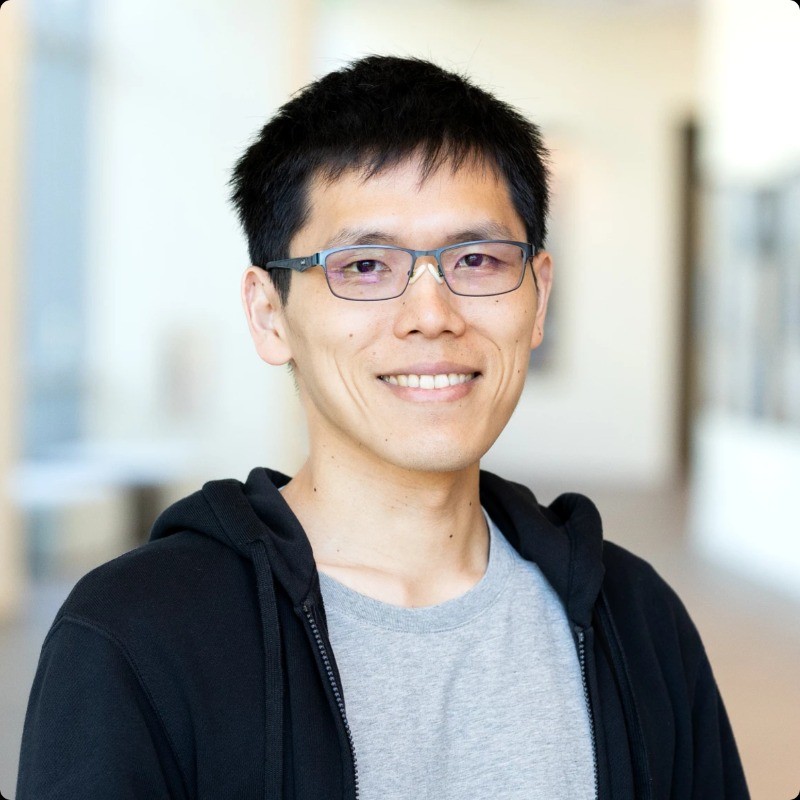
Hire Dr. Pin-Yao H.
United States
USD 15 /hr
Biology PhD with 15yrs expertise in molecular genetics, genomics, CRISPR, and plant pathology
Profile Summary
Subject Matter Expertise
Services
Research
Fact Checking,
Scientific and Technical Research
Consulting
Scientific and Technical Consulting
Data & AI
Image Processing,
Data Visualization,
Data Processing,
Data Insights
Work Experience
Sr. Scientist
Ionis Pharmaceuticals
March 2023 - Present
Postdoctoral Fellow
NYU Langone Medical Center
November 2017 - March 2023
Education
PhD in Plant Biology
National Taiwan University
September 2012 - June 2017
Certifications
- Certification details not provided.
Publications
PREPRINT
Pin-Yao Huang, Havva Ortabozkoyun, Hyunwoo Cho, Aristotelis Tsirigos, Esteban Mazzoni, Danny Reinberg (2023). Novel Chromatin Insulating Activities Uncovered upon Eliminating Known Insulatorsin vivo .
Pin-Yao Huang, Havva Ortabozkoyun-Kara, Hyunwoo Cho, Varun Narendra, Gary Leroy, Jane A. Skok, Aristotelis Tsirigos, Esteban O. Mazzoni, Danny Reinberg(2020). A CRISPR Screen Identifies Myc-associated Zinc Finger Protein (MAZ) as an Insulator Functioning at CTCF boundaries in Hox Clusters . Cold Spring Harbor Laboratory
JOURNAL ARTICLE
Pin-Yao Huang, Havva Ortabozkoyun, Hyunwoo Cho, Varun Narendra, Gary LeRoy, Edgar Gonzalez-Buendia, Jane A. Skok, Aristotelis Tsirigos, Esteban O. Mazzoni, Danny Reinberg(2022). CRISPR and biochemical screens identify MAZ as a cofactor in CTCF-mediated insulation at Hox clusters . Nature Genetics. 54. (2). Microsoft.AspNetCore.Mvc.Localization.LocalizedHtmlString 202--212. Springer Science and Business Media {LLC}
Ratings and Comments
Total Projects Awarded:
Comments: