level-one heading

Why Kolabtree
Getting started is quick and easy. No upfront fees
It’s free to request a service and invite bids from experts
Discuss requirements with the expert in detail before accepting statement of work from Kolabtree
Collaborate with the expert directly to get your work done the right way
Fund project when you hire the expert, but approve the deliverables only once work is done
Want to hire this expert for a project? Request a quote for free.
Profile Details
Create Project
★★★★★
☆☆☆☆☆
USD 30 /hr
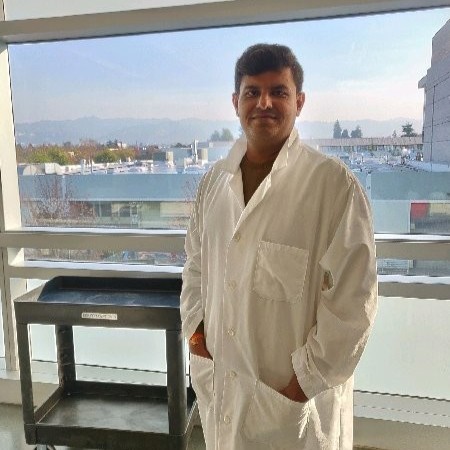
Hire Dr. Manoj U.
United Kingdom
USD 30 /hr

Freelance writer for research proposal, manuscripts and reviews in the field of Neuropharmacology and Neuroscience

Profile Summary
Subject Matter Expertise
Services
Writing Clinical Trial Documentation, Technical Writing, Copywriting, Newswriting
Research Market Research, User Research, Gap Analysis, Systematic Literature Review, Secondary Data Collection
Data & AI Statistical Analysis
Product Development Product Evaluation, Product Validation, Concept Development
Work Experience

Aston University

- Present

Postdoctoral Research Associate

Aston University

April 2019 - Present

Postdoctoral Research Associate

Indian Institute of Science Education Research Pune

November 2017 - March 2019

Senior Executive Scientist

Sunpharma Advanced Research Company Ltd.

November 2015 - November 2017

Assistant Professor in Pharmacology

Smt. Kishoritai Bhoyar College of Pharmacy

August 2013 - November 2015

Education

PhD (Faculty of Medicine) (Department of Pharmaceutical Sciences)

Rashtrasant Tukadoji Maharaj Nagpur University

September 2009 - March 2013

Master of Pharmacy (Pharmacology) (University Department of Pharmaceutical Sciences)

Rashtrasant Tukadoji Maharaj Nagpur University

July 2005 - September 2007

Bachelor of Pharmacy (J.L.C. College of Pharmacy)

Rashtrasant Tukadoji Maharaj Nagpur University

June 2002 - July 2005

Certifications
  • Masters of Business Administration

    National Institute of Business Management

    June 2014 - Present

Publications
JOURNAL ARTICLE
Encephalitis patient-derived monoclonal GABAA receptor antibodies cause epileptic seizures @article{43e2a80da9ec4a4d8862b47b05912e9e, title = "Encephalitis patient-derived monoclonal GABAA receptor antibodies cause epileptic seizures", abstract = "Autoantibodies targeting the GABAA receptor (GABAAR) hallmark an autoimmune encephalitis presenting with frequent seizures and psychomotor abnormalities. Their pathogenic role is still not well-defined, given the common overlap with further autoantibodies and the lack of patient-derived mAbs. Five GABAAR mAbs from cerebrospinal fluid cells bound to various epitopes involving the α1 and γ2 receptor subunits, with variable binding strength and partial competition. mAbs selectively reduced GABAergic currents in neuronal cultures without causing receptor internalization. Cerebroventricular infusion of GABAAR mAbs and Fab fragments into rodents induced a severe phenotype with seizures and increased mortality, reminiscent of encephalitis patients' symptoms. Our results demonstrate direct pathogenicity of autoantibodies on GABAARs independent of Fc-mediated effector functions and provide an animal model for GABAAR encephalitis. They further provide the scientific rationale for clinical treatments using antibody depletion and can serve as tools for the development of antibody-selective immunotherapies.", author = "Jakob Kreye and Wright, {Sukhvir K} and {van Casteren}, Adriana and Laura St{\"o}ffler and Marie-Luise Machule and Reincke, {S Momsen} and Marc Nikolaus and {van Hoof}, Scott and Elisa Sanchez-Sendin and Homeyer, {Marie A} and {Cordero G{\'o}mez}, C{\'e}sar and Hans-Christian Kornau and Dietmar Schmitz and Kaindl, {Angela M} and Philipp Boehm-Sturm and Susanne Mueller and Wilson, {Max A} and Upadhya, {Manoj A} and Dhangar, {Divya R} and Stuart Greenhill and Gavin Woodhall and Paul Turko and Imre Vida and Garner, {Craig C} and Jonathan Wickel and Christian Geis and Yuko Fukata and Masaki Fukata and Harald Pr{\"u}ss", note = "{\textcopyright} 2021 Kreye et al. This article is distributed under the terms of an Attribution–Noncommercial–Share Alike–No Mirror Sites license for the first six months after the publication date (see http://www.rupress.org/terms/). After six months it is available under a Creative Commons License (Attribution–Noncommercial–Share Alike 4.0 International license, as described at https://creativecommons.org/licenses/by-nc-sa/4.0/).", year = "2021", month = sep, day = "21", doi = "10.1084/jem.20210012", language = "English", volume = "218", journal = "Journal of Experimental Medicine ", issn = "0022-1007", publisher = "Rockefeller University Press", number = "11", } . Journal of Experimental Medicine.
Multimodal electrophysiological analyses reveal that reduced synaptic excitatory neurotransmission underlies seizures in a model of NMDAR antibody-mediated encephalitis @article{3bf57a9f929a44159216ef72feafb2db, title = "Multimodal electrophysiological analyses reveal that reduced synaptic excitatory neurotransmission underlies seizures in a model of NMDAR antibody-mediated encephalitis", abstract = "Seizures are a prominent feature in N-Methyl-D-Aspartate receptor antibody (NMDAR antibody) encephalitis, a distinct neuro-immunological disorder in which specific human autoantibodies bind and crosslink the surface of NMDAR proteins thereby causing internalization and a state of NMDAR hypofunction. To further understand ictogenesis in this disorder, and to test a potential treatment compound, we developed an NMDAR antibody mediated rat seizure model that displays spontaneous epileptiform activity in vivo and in vitro. Using a combination of electrophysiological and dynamic causal modelling techniques we show that, contrary to expectation, reduction of synaptic excitatory, but not inhibitory, neurotransmission underlies the ictal events through alterations in the dynamical behaviour of microcircuits in brain tissue. Moreover, in vitro application of a neurosteroid, pregnenolone sulphate, that upregulates NMDARs, reduced established ictal activity. This proof-of-concept study highlights the complexity of circuit disturbances that may lead to seizures and the potential use of receptor-specific treatments in antibody-mediated seizures and epilepsy.", author = "Wright, {Sukhvir K} and Rosch, {Richard E} and Wilson, {Max A} and Upadhya, {Manoj A} and Dhangar, {Divya R} and Charlie Clarke-Bland and Wahid, {Tamara T} and Sumanta Barman and Norbert Goebels and Jakob Kreye and Harald Pr{\"u}ss and Leslie Jacobson and Bassett, {Danielle S} and Angela Vincent and Greenhill, {Stuart D} and Woodhall, {Gavin L}", note = "This article is licensed under a Creative Commons Attribution 4.0 International License, which permits use, sharing, adaptation, distribution and reproduction in any medium or format, as long as you give appropriate credit to the original author(s) and the source, provide a link to the Creative Commons license, and indicate if changes were made. The images or other third party material in this article are included in the article{\textquoteright}s Creative Commons license, unless indicated otherwise in a credit line to the material. If material is not included in the article{\textquoteright}s Creative Commons license and your intended use is not permitted by statutory regulation or exceeds the permitted use, you will need to obtain permission directly from the copyright holder. To view a copy of this license, visit http://creativecommons.org/licenses/by/4.0/. Funding: S.K.W. was funded by an Epilepsy Research UK Fellowship (F3001) and Wellcome Trust Clinical Research Career Development Fellowship (216613/Z/19/Z) during this work. H.P. received support from the German Research Foundation (DFG; grant numbers PR1274/3-1, 4-1, 5-1) and the German Federal Ministry of Education and Research (BMBF; Connect-Generate). N.G. received support from the German Ministry for Education and Research (BMBF; 31P7398 and Connect-Generate), the National Multiple Sclerosis Society (NMSS; BRAVEinMS), the Wellcome Trust (208938/Z/17/Z) and the Forschungskommission of the Medical Faculty of the Heinrich-Heine-University. S.D.G. and D.D. funded in part by the Academy of Medical Sciences (SBF004\1053).", year = "2021", month = sep, day = "20", doi = "10.1038/s42003-021-02635-8", language = "English", volume = "4", journal = "Communications Biology", issn = "2399-3642", publisher = "Springer", number = "1", } . Communications Biology.
Transient systemic inflammation in adult male mice results in underweight progeny @article{fb5e6895c4d74ac1a88b5e28fe3de9c4, title = "Transient systemic inflammation in adult male mice results in underweight progeny", abstract = "PROBLEM: While the testes represent an immune-privileged organ, there is evidence that systemic inflammation is accompanied by local inflammatory responses. We therefore examined whether transient systemic inflammation caused any inflammatory and functional consequences in murine testes.METHOD OF STUDY: Using a single systemic administration of Toll-like receptor (TLR) agonists [lipopolysaccharide (LPS) or peptidoglycan (PG) or polyinosinic-polycytidylic acid (polyIC)] in young adult male mice, we assessed testicular immune-inflammatory landscape and reproductive functionality.RESULTS: Our findings demonstrated a significant induction of testicular TNF-α, IL-1β and IL-6 transcripts within 24 h of TLR agonist injection. By day 6, these cytokine levels returned to baseline. While there was no change in caudal sperm counts at early time points, eight weeks later, twofold decrease in sperm count and reduced testicular testosterone levels were evident. When these mice were subjected to mating studies, no differences in mating efficiencies or litter sizes were observed compared with controls. Nonetheless, the neonatal weights of progeny from LPS/PG/polyIC-treated sires were significantly lower than controls. Postnatal weight gain up to three weeks was also slower in the progeny of LPS/polyIC-treated sires. Placental weights at 17.5 days post-coitum were significantly lower in females mated to LPS- and polyIC-treated males. Given this likelihood of an epigenetic effect, we found lower testicular levels of histone methyltransferase enzyme, mixed-lineage leukaemia-1, in mice given LPS/PG/polyIC 8 weeks earlier.CONCLUSION: Exposure to transient systemic inflammation leads to transient local inflammation in the testes, with persistent sperm-mediated consequences for foetal development.", keywords = "epigenetics, inflammation, male fertility, placenta, progeny, sperm", author = "Sushama Rokade and Manoj Upadhya and Bhat, {Dattatray S.} and Nishikant Subhedar and Yajnik, {Chittaranjan S.} and Aurnab Ghose and Satyajit Rath and Vineeta Bal", note = "Funding Information: Financial support from the DBT‐RA Program in Biotechnology and Life Sciences Department of Biotechnology, Government of India to SuR and Cognitive Science Research Initiative, Department of Science and Technology, Government of India to AG and NS (Grant No. SR/CSRI/331/2016(G)) is gratefully acknowledged. Indian Institute of Science Education and Research, Pune, is funded by Ministry of Education, Government of India. ", year = "2021", month = jul, doi = "10.1111/aji.13401", language = "English", volume = "86", journal = "American Journal of Reproductive Immunology", issn = "1046-7408", publisher = "Wiley-Blackwell", number = "1", } . American Journal of Reproductive Immunology.
Nicotine-induced Brain Stimulation Reward is Modulated by Melanocortin-4 Receptors in Ovariectomized Rats @article{2aad78009ca342cc9b8bdabe4852966c, title = "Nicotine-induced Brain Stimulation Reward is Modulated by Melanocortin-4 Receptors in Ovariectomized Rats", abstract = "Apart from reproduction, estrogen influences a multitude of processes. Increase in estrogen levels in women is known to promote reward probably mediated via the melanocortin and dopamine systems. Reduced estrogen in post-menopausal women attenuates reward, evoking the need for stimulation with greater rewarding salience. This is reflected in the well-recognized phenomena of difficulty in quitting and increased craving for nicotine in women following the onset of menopause. The present study aims at understanding the role of melanocortin receptors (MC-R) in nicotine-induced reward behavior following ovariectomy in rats. The MC4-R mRNA level was increased in ipsilateral nucleus accumbens (Acb) of the intact rats implanted with electrode in medial forebrain bundle and trained in intracranial self-stimulation (ICSS) paradigm. Additional groups of ICSS trained rats were ovariectomized (OVX) and subjected to reward evaluation. Trained OVX rats revealed a significant increase in threshold frequency and rightward shift in rate frequency curve, suggesting reward deficit behavior. However, pre-administration with nicotine, alpha-melanocyte stimulating hormone (α-MSH) or NDP-MSH (MC4-R agonist) to OVX animals restored the rewarding activity in ICSS protocol; HS014 (MC4-R antagonist) suppressed the lever press activity. Prior treatment with sub-effective doses of α-MSH or NDP-MSH potentiated the reward effect of nicotine, but was attenuated by HS014. Alpha-MSH-immunoreactivity was decreased in the Acb shell, arcuate and paraventricular nucleus of hypothalamus, and ventral bed nucleus of stria terminalis in the OVX rats, while nicotine treatment restored the same. We suggest a role for the endogenous MC system, perhaps acting via MC4-R, in the nicotine-induced reward in OVX rats.", keywords = "Brain stimulation reward, Immunofluorescence, Melanocortin receptors, Nicotine, Ovariectomy, QRT-PCR", author = "Upadhya, {Manoj A} and Upadhya, {Harshita M} and Borkar, {Chandrashekhar D} and Choudhary, {Amit G} and Uday Singh and Priyanka Chavan and Amul Sakharkar and Praful Singru and Subhedar, {Nishikant K} and Kokare, {Dadasaheb M}", note = "Copyright {\textcopyright} 2020 IBRO. Published by Elsevier Ltd. All rights reserved.", year = "2020", month = apr, day = "1", doi = "10.1016/j.neuroscience.2020.01.035", language = "English", volume = "431", pages = "205--221", journal = "Neuroscience", issn = "0306-4522", publisher = "Elsevier", } . Neuroscience.
Transient Receptor Potential Vanilloid 3 (TRPV3) in the Cerebellum of Rat and Its Role in Motor Coordination @article{23ec21a7e4e744b1a2a5682e3f85c3a0, title = "Transient Receptor Potential Vanilloid 3 (TRPV3) in the Cerebellum of Rat and Its Role in Motor Coordination", abstract = "Thermosensitive transient receptor potential vanilloid (TRPV) channels are widely expressed in the brain and known to profoundly influence Ca 2+-signaling, neurotransmitter release and behavior. While these channels are expressed in the cerebellum, neuronal firing and hyperactivity/reflexes seem associated with cerebellar temperature modulation. However, the distribution and functional significance of TRPV-equipped elements in the cerebellum has remained unexplored. Among TRPV sub-family, TRPV3 is regulated by temperature within physiological range and its transcript highly expressed in the brain. The study aims at exploring the relevance of TRPV3 in the cerebellum of developing and adult rat. RT-PCR analysis showed expression of N- and C-terminal fragments of TRPV3 mRNA in the adult rat cerebellum. Using double immunofluorescence, TRPV3-immunoreactivity was observed in Calbindin D28K-labeled Purkinje neurons. The sections of cerebellum from the postnatal rats (P4, P8, P16 and P42) were processed for TRPV3-immunofluorescence. Compared to P4 and P8, the percent fluorescent area of TRPV3-immunoreactivity significantly increased in the cerebellum of P16 and P42 rats. With a view to test the significance of TRPV3 in cerebellar function, TRPV3-agonist (eugenol) or -inhibitors [ruthenium red or isopentenyl pyrophosphate (IPP)] were administered stereotaxically intra-cerebellum and motor responses analyzed. Compared to controls, rats injected with TRPV3 inhibitor significantly reduced the stride length (P < 0.001), locomotor activity (P < 0.001), and rotarod retention time (P < 0.001), but increased footprints length (P < 0.01) and escape latency (P < 0001). TRPV3-agonist treatment, however, had no effect on these behaviors. We suggest that TRPV3 in Purkinje neurons may serve as novel molecular component for Ca 2+-signaling and motor coordination function of the cerebellum. ", keywords = "Purkinje neurons, TRPV3, cerebellum, motor coordination", author = "Uday Singh and Manoj Upadhya and Sumela Basu and Omprakash Singh and Santosh Kumar and Kokare, {Dadasaheb M} and Singru, {Praful S}", year = "2020", month = jan, day = "1", doi = "10.1016/j.neuroscience.2019.10.047", language = "English", volume = "424", pages = "121--132", journal = "Neuroscience", issn = "0306-4522", publisher = "Elsevier", } . Neuroscience.
Uday Singh, Manoj Upadhya, Sumela Basu, Omprakash Singh, Santosh Kumar, Dadasaheb M. Kokare, Praful S. Singru(2020). Transient Receptor Potential Vanilloid 3 (TRPV3) in the Cerebellum of Rat and Its Role in Motor Coordination . Neuroscience. 424. p. 121--132. Elsevier {BV}
Neuroprotective effect of agmatine in mouse spinal cord injury model @article{bfb052163ac84b25a78954a42f558e1f, title = "Neuroprotective effect of agmatine in mouse spinal cord injury model: Modulation by imidazoline receptors", abstract = "Objective: The involvement of imidazoline receptors in the effect of agmatine was studied in locomotor recovery following experimental SCI (ESCI) in mice. Methods: ESCI was induced in mice using compression method. Locomotor function score (0-10) was measured on day 14 following ESCI. Results: Agmatine (2.5, 5, and 10 mg/kg) treatment through intraperitoneal route for 14 days following ESCI, dose-dependently improved the motor function score. Clonidine (0.1 mg/kg; imidazoline I1 receptor agonist) or moxonidine (0.5 mg/kg; I2 receptor agonist) treatment 15 min before agmatine (2.5 mg/kg) daily for 14 days, following ESCI, significantly potentiated the effect of per se agmatine. On the other hand, 15 min before treatment of efaroxan (1 mg/kg; imidazoline I1 receptor antagonist) or idazoxan (3 mg/kg; imidazoline I2 receptor antagonist) significantly blocked the motor function score of agmatine (10 mg/kg). Conclusion: These data suggest that imidazoline receptors may modulate the locomotor recovery following ESCI in agmatine treated mice, perhaps through I1/I2 receptors.", keywords = "Agmatine, imidazoline receptors, locomotor recovery, motor function score, spinal cord injury", author = "Madhura DIxit and Manoj Upadhya and Brijesh Taksande and Prachi Raut and Milind Umekar and Nandkishor Kotagale", note = "This is an open access journal, and articles are distributed under the terms of the Creative Commons Attribution-NonCommercial-ShareAlike 4.0 License, which allows others to remix, tweak, and build upon the work non-commercially, as long as appropriate credit is given and the new creations are licensed under the identical terms.", year = "2018", month = jul, day = "1", doi = "10.4103/jnsbm.JNSBM_239_17", language = "English", volume = "9", pages = "115--120", journal = "Journal of Natural Science, Biology and Medicine", issn = "0976-9668", publisher = "Wolters Kluwer Medknow Publications", number = "2", } . Journal of Natural Science, Biology and Medicine.
(2014). A simple and economical method of electrode fabrication for brain self-stimulation in rats . Journal of Pharmacological and Toxicological Methods.
WORKING PAPER
In vitro characterisation and neurosteroid treatment of an N-Methyl-D-Aspartate receptor antibody-mediated seizure model @techreport{8fb405c2a53c47f5ad5dd2162de63ef1, title = "In vitro characterisation and neurosteroid treatment of an N-Methyl-D-Aspartate receptor antibody-mediated seizure model", abstract = "Seizures are a prominent feature in N-Methyl-D-Aspartate receptor antibody (NMDAR-Ab) encephalitis, a distinct neuro-immunological disorder in which specific human autoantibodies bind and crosslink the surface of NMDAR proteins thereby causing internalization and a state of NMDAR hypofunction. To further understand ictogenesis in this disorder, and to test a novel treatment compound, we developed an NMDAR-Ab mediated rat seizure model that displays spontaneous epileptiform activity in vivo and in vitro. Using a combination of electrophysiological and dynamic causal modelling techniques we show that, contrary to expectation, reduction of synaptic excitatory, but not inhibitory, neurotransmission underlies the ictal events through alterations in the dynamical behaviour of microcircuits in brain tissue. Moreover, in vitro application of an NMDAR-specific neurosteroid, pregnenolone sulfate, that upregulates NMDARs, reduced established ictal activity. This proof-of-concept study highlights the complexity of circuit disturbances that may lead to seizures and the potential use of receptor-specific treatments in antibody-mediated seizures and epilepsy.", author = "Wright, {Sukhvir K} and Rosch, {Richard E} and Wilson, {Max A} and Upadhya, {Manoj A} and Dhangar, {Divya R} and Charlie Clarke-Bland and Wahid, {Tamara T} and Sumanta Barman and Norbert Goebels and Jakob Kreye and Harald Pr{\"u}ss and Leslie Jacobson and Bassett, {Danielle S} and Angela Vincent and Greenhill, {Stuart D} and Woodhall, {Gavin L}", note = "The copyright holder for this preprint is the author/funder, who has granted bioRxiv a license to display the preprint in perpetuity. All rights reserved. No reuse allowed without permission. Funding: SKW was funded by an Epilepsy Research UK Fellowship (F3001) and Wellcome Trust Clinical Research Career Development Fellowship (216613/Z/19/Z) during this work. HP received support from the German Research Foundation (DFG; grant numbers PR1274/3-1, 4-1, 5-1) and the German Federal Ministry of Education and Research (BMBF; Connect-Generate). NG received support from the German Ministry for Education and Research (BMBF; 31P7398 and Connect-Generate), the National Multiple Sclerosis Society (NMSS; BRAVEinMS), the Wellcome Trust (208938/Z/17/Z) and the Forschungskommission of the Medical Faculty of the Heinrich-Heine-University.", year = "2020", month = dec, day = "22", doi = "10.1101/2020.12.22.423962", language = "English", publisher = "bioRxiv", type = "WorkingPaper", institution = "bioRxiv", } .
OTHER
Sukhvir K Wright, Richard E Rosch, Max A Wilson, Manoj A Upadhya, Divya R Dhangar, Charlie Clarke-Bland, Tamara T Wahid, Sumanta Barman, Norbert Goebels, Jakob Kreye, et al.(2020). In vitro characterisation and neurosteroid treatment of an N-Methyl-D-Aspartate receptor antibody-mediated seizure model . Cold Spring Harbor Laboratory
PATENT
(2019). TREATMENT FOR PARKINSON'S DISEASE.
(2017). TREATMENT FOR PARKINSON'S DISEASE . World International Patent Organization.